Get your Gap Audit


AmplifAI, rebuilt on Client-First
AI performance enablement for contact center teams
Website design · Design system · Webflow and Next.js development

Max Performance is a SaaS website design agency that designs, builds and keeps B2B marketing websites current, with page templates, CMS collections and search structure, for B2B software companies, their marketing leads and founders.
B2B SaaS marketing leads arrive after shipping three new features, two pricing changes and a repositioning, while the website still describes the product from eighteen months ago. Max Performance keeps the site selling the product as it exists today, not as it launched.
Selected companies Max Performance has worked with.
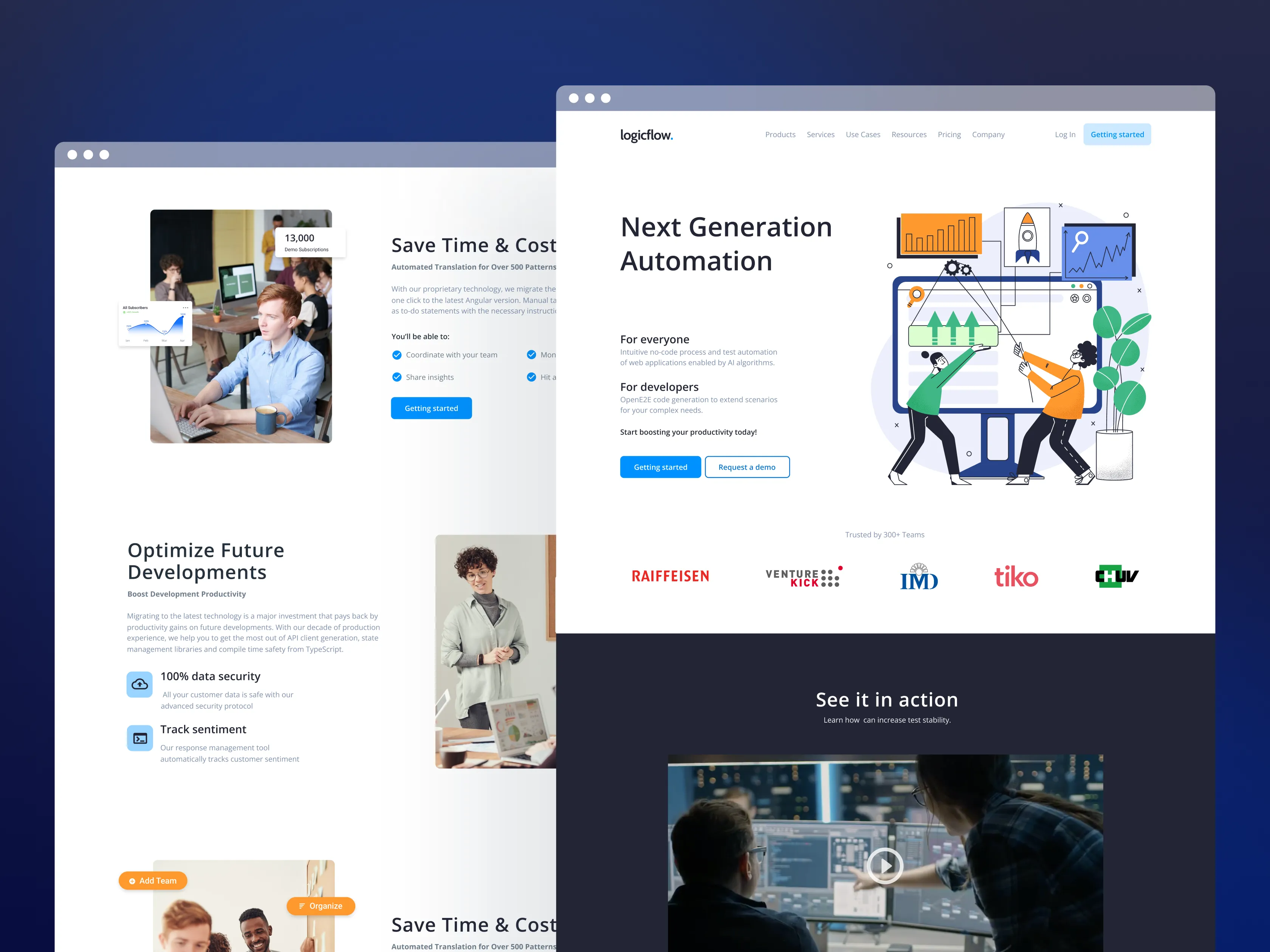
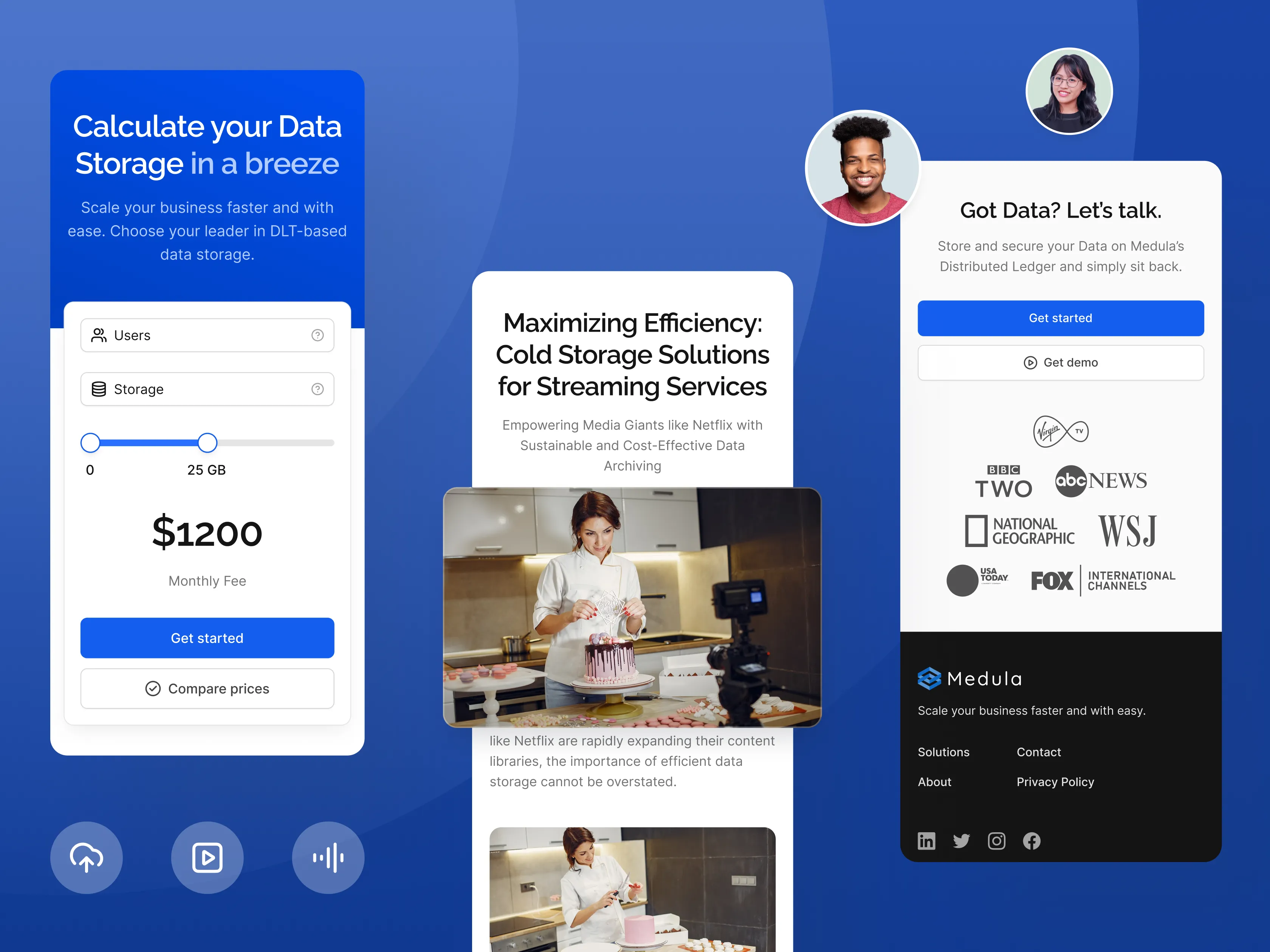
Max Performance designs and builds the marketing website that turns software buyers into demo requests, trials and signed contracts for B2B SaaS companies.
Product complexity exceeds what a single page explains, so product pages follow one template the marketing team reuses for every feature. Three or four roles read the same page for different reasons, so use case pages speak to each buying role in that role's language.
A demo or a trial is the conversion event rather than a purchase, so comparison pages answer what prospects ask about competitors. Content grows every week as the product ships, so the CMS holds the collections that let the team publish without a developer.
Structure carries as much weight as visual design, because Google and AI search engines read structure to decide which SaaS website answers the query.
How Google and AI search engines read that structure, and what makes a SaaS page citable, is explained in the guide to answer engine optimization.
SaaS website design services at Max Performance cover the full path from strategy to the changes a B2B SaaS team requests months after launch:
| Capability | What it does |
|---|---|
| Website design and build | Max Performance designs the site and builds it in custom code on Next.js or Astro, or in Webflow when your marketing team wants a visual editor. |
| Page systems for product, feature and use case pages | Max Performance builds one reference template per page type, so the marketing team publishes ten more pages without breaking the structure. |
| Landing pages for campaigns | Max Performance builds the pages behind paid campaigns and launches, matching the message of each ad to the page that receives the click. |
| CMS architecture | Max Performance designs the collections, fields and relationships that hold customer stories, resources, glossary terms and blog articles. |
| Technical SEO and AEO structure | Max Performance sets the heading hierarchy, descriptive section IDs, URL model, internal linking rules and JSON-LD schema per page type, which is what makes pages extractable by AI Overviews and citable by ChatGPT and Perplexity. |
| Ongoing changes under the Category Leader plan | Max Performance keeps the website moving after launch, with unlimited requests and most of them delivered within 48 hours. |
| Max Performance delivers each saas website design capability listed here. | |
| Capability | What it does |
|---|---|
| New pages on existing templates | Feature pages, use case pages, comparison pages and landing pages, built on the templates the site already has. |
| New sections and copy changes | A hero rewritten, a section added, a price updated across the site. |
| CMS items and collections | Customer stories, resources, blog posts, glossary entries, plus new fields when the structure needs them. |
| Landing pages for campaigns | Pages behind paid campaigns and launches, matched to the message of the ad. |
| Redirects and URL changes | One-hop redirects, mapped and verified, so no page loses its rankings when it moves. |
| Schema and technical SEO | JSON-LD per page type, heading hierarchy, internal linking rules kept intact as the site grows. |
| Speed and Core Web Vitals | Images, fonts, scripts and layout shift, checked on the rendered code. |
| Fixes | Broken links, forms that stopped sending, tracking that stopped firing, display bugs on mobile. |
| Explore website maintenance | |
| Capability | What it does |
|---|---|
| Structure audit | What blocks answer engines on your site today, with the fixes in priority order. |
| Answer engine optimization architecture | One architecture applied across every template and page type, so new pages inherit it. |
| Structured data | Structured data written and validated for every template, not a plugin default. |
| Existing pages restructured | Your current pages restructured so answer engines can use them, without losing the sales argument. |
| Consistent company facts | One version of your company facts and product names across the whole website. |
| Monthly tracking | Search performance plus how the brand shows up in AI answers, reported every month. |
| Explore answer engine optimization | |
| Capability | What it does |
|---|---|
| Positioning and messaging hierarchy | What the site argues, in what order, for each buying role. |
| Sitemap and page architecture | URL model, heading architecture and one template per page type. |
| Design system | Homepage plus one reference page per template, built on your brand rather than a theme. |
| Build | Custom code (Next.js or Astro), or Webflow when the team needs a visual editor. |
| CMS structure | Collections and fields so your team publishes without a developer. |
| Migration that keeps rankings | URL mapping, one-hop redirects, forms and tracking QA, verified before and after launch. |
| Technical SEO and AEO | Schema per page type, Core Web Vitals, extractable structure, checked on the rendered code. |
| Explore website redesign | |
| Capability | What it does |
|---|---|
| Evidence set and inventory | Every URL, ranking page, backlink target and template on the current site, recorded before anything moves. |
| URL ledger | One row per URL with its decision: keep, merge, redirect or retire. |
| Redirect map | One-hop redirects for every URL that changes, imported complete and exported again to compare. |
| Content and CMS migration | Collections, fields and entries mapped to the new structure, piloted per content type. |
| Structure carried over | Headings, internal links, schema and metadata moved on purpose, page by page. |
| Forms, tracking and analytics | Every form, event and integration tested on the new site before cutover. |
| Verification on the rendered code | Titles, headings, schema and links checked on the rendered output, not the source files. |
| Explore website migration | |
| Capability | What it does |
|---|---|
| Webflow design and build | Custom design and a Webflow build, with one reference page per template. |
| Migration to Webflow | From WordPress, Elementor, Framer or a custom stack, with URL mapping and one-hop redirects. |
| CMS architecture | Collections, fields and relationships for customer stories, resources, glossary, blog and documentation. |
| Page systems | Product, feature, use case, comparison and industry templates your team reuses without breaking the structure. |
| Technical SEO and AEO inside the build | Heading hierarchy, section ids, JSON-LD per page type, Core Web Vitals verified on the rendered code. |
| Build from your designer's files | Figma handed over by your team or your design partner, built to spec. |
| Ongoing changes | New pages, sections, copy and CMS items after launch, under the monthly plan. |
| Explore webflow design and development | |
Teams that need Webflow design and development on its own read the Webflow agency for B2B SaaS page, and teams that already have a site they want kept current read the website maintenance services page.
Teams that need a single campaign page rather than a whole site compare specialists in the guide to the best SaaS landing page design agencies.
B2B SaaS websites convert well for one quarter and then decay, for three reasons Max Performance finds in every audit.
No content system
First, the website ships as a design project with no content system behind it, so the marketing team requests a developer every time a feature launches, and the pages that would capture demand never get published.
The structure drifts
Second, the structure drifts, because a different contractor builds each new page with a different heading layer and a different URL pattern, until Google reads the site as a pile of pages instead of a hierarchy.
Nobody owns the architecture
Third, the agency hands over the files and leaves, which means nobody owns the architecture while the product keeps shipping.
Max Performance solves the ownership problem first. One person owns the structure of the SaaS website, before launch and after it, so the site still matches the product a year later.
After launch, the Category Leader plan keeps that ownership in place, and the plan price sits on the Max Performance pricing page.
Max Performance builds a SaaS website in four phases, in custom code on Next.js and Vercel, or in Webflow when the marketing team wants to edit visually, with the timeline set in the Gap Audit and pages going live month by month on the Category Leader plan. Max Performance holds Webflow Certified Partner status and applies the same build standard to every project, covering heading hierarchy, CMS structure, schema and performance budgets.
Max Performance maps the buying roles, the page inventory and the URL model, then agrees the sitemap and the heading architecture with your team in one session.
Max Performance designs the homepage and one reference page per template, so your team reviews the system rather than twenty separate screens.
Max Performance builds the approved designs in Webflow with the CMS collections, the schema per page type and the responsive behaviour across breakpoints.
Max Performance runs the pre-launch checklist, sets the redirect map, verifies Core Web Vitals and schema on the rendered code, and launches.
Your team supplies copy, product screenshots and one point of contact for decisions. Max Performance supplies everything else, including placeholder copy where final wording arrives late, so the build never waits.
Ed Perez, founder of Max Performance, leads every SaaS website design project, and the steps from the first call to launch are on the how working with Max Performance works page.
SaaS website design at Max Performance covers legal AI, engineering automation and secure digital asset storage, three categories where the product carries real technical depth and the website has to explain the product without a sales call.
AI performance enablement for contact center teams
Website design · Design system · Webflow and Next.js development
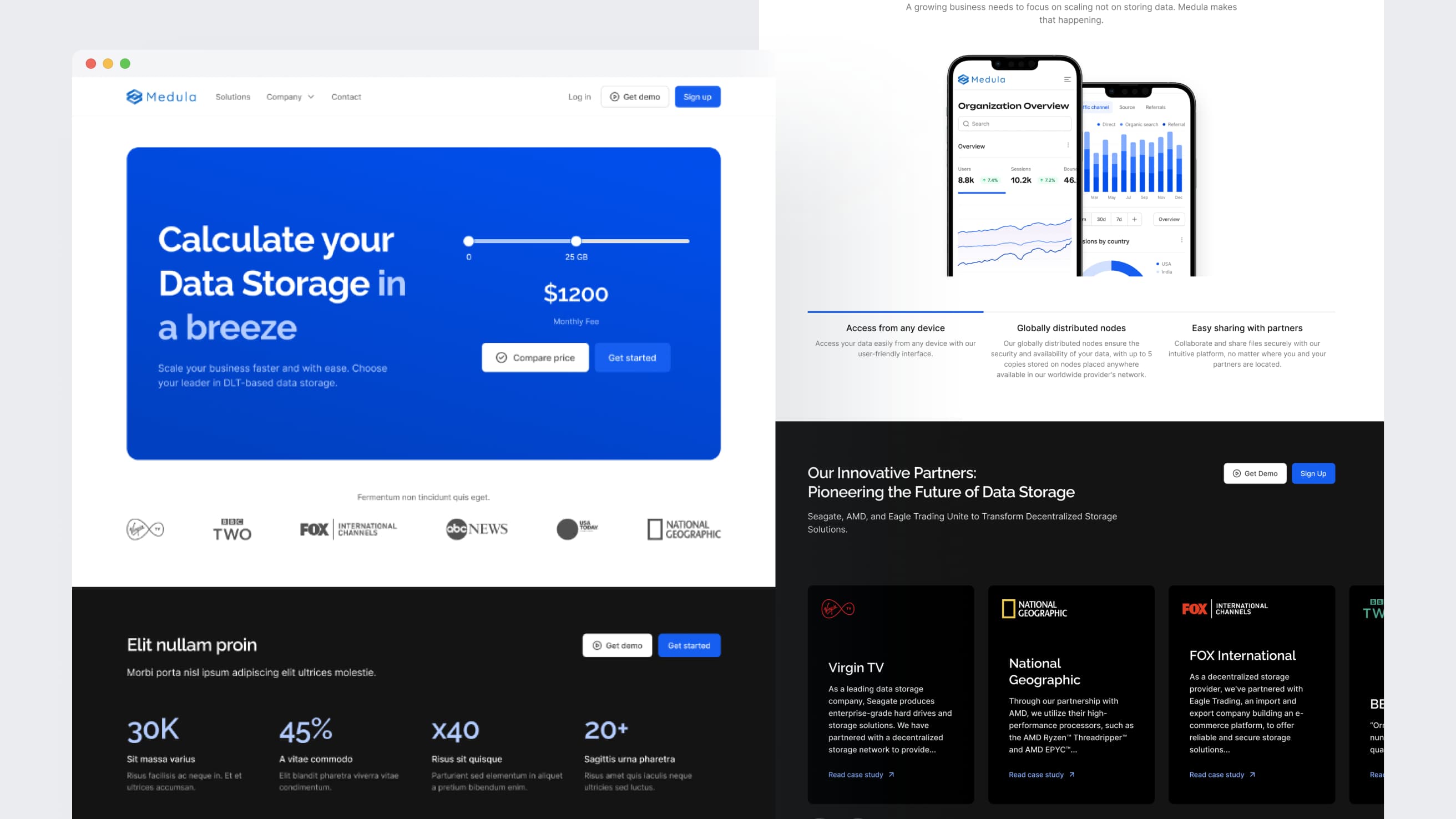
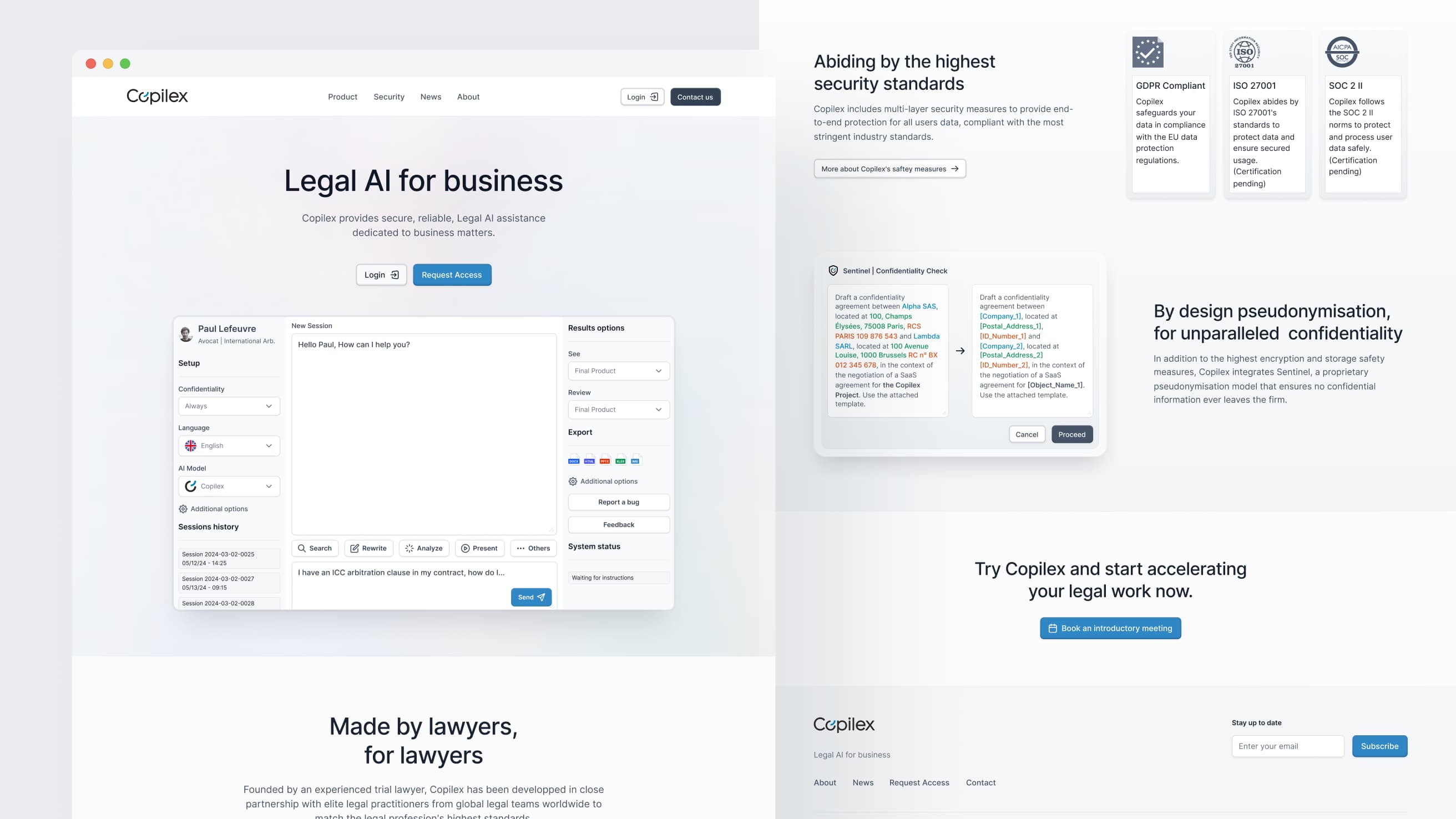
Max Performance designed the website and the dashboard UI for a Paris-based legal AI startup preparing investor conversations and EU innovation funding, delivering a minimalist brand system, a component-based dashboard for contract workflows, and a refined visual identity. Read the legal AI SaaS web design case study.
SaaS · LegalTech · AI
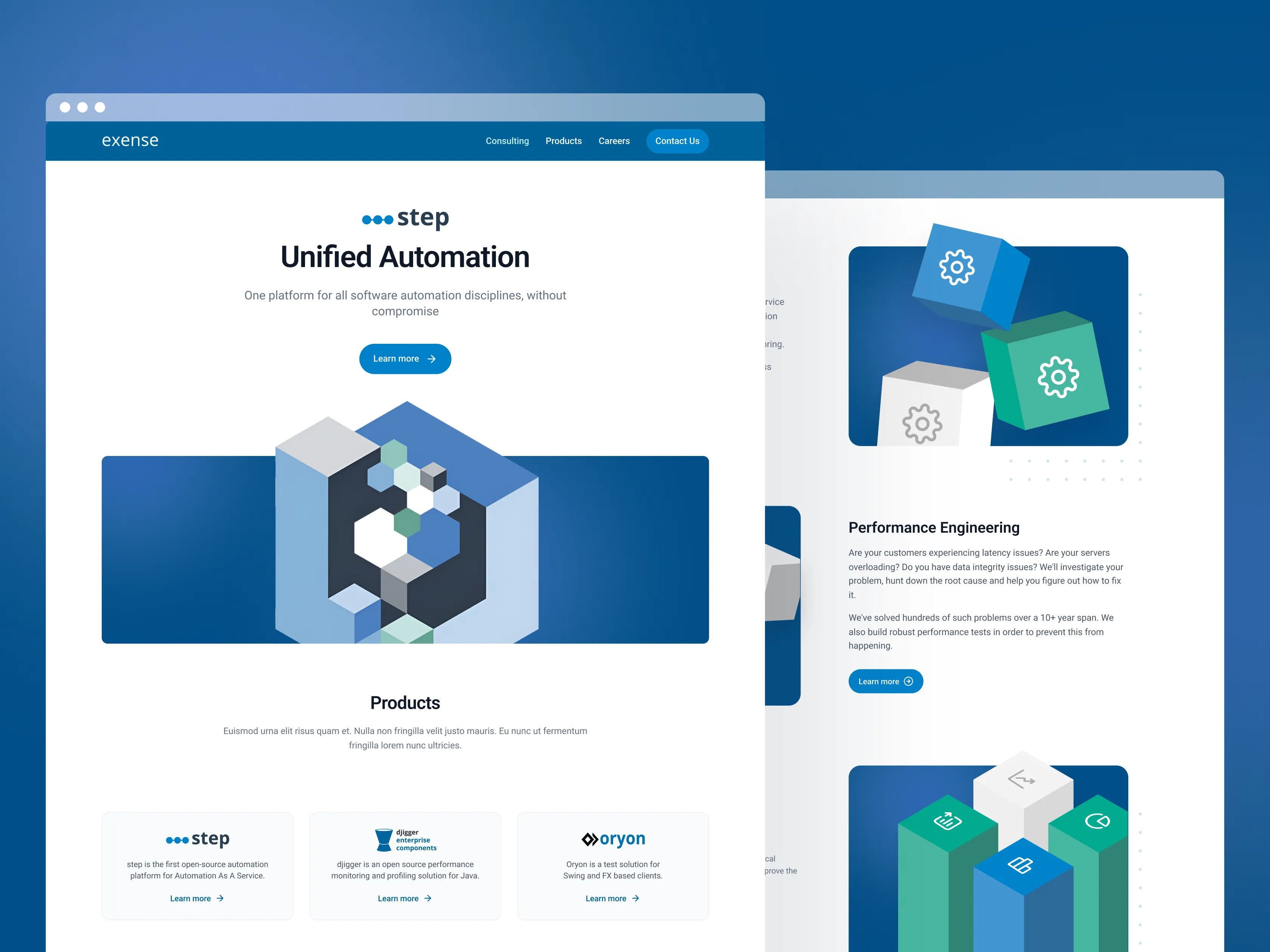
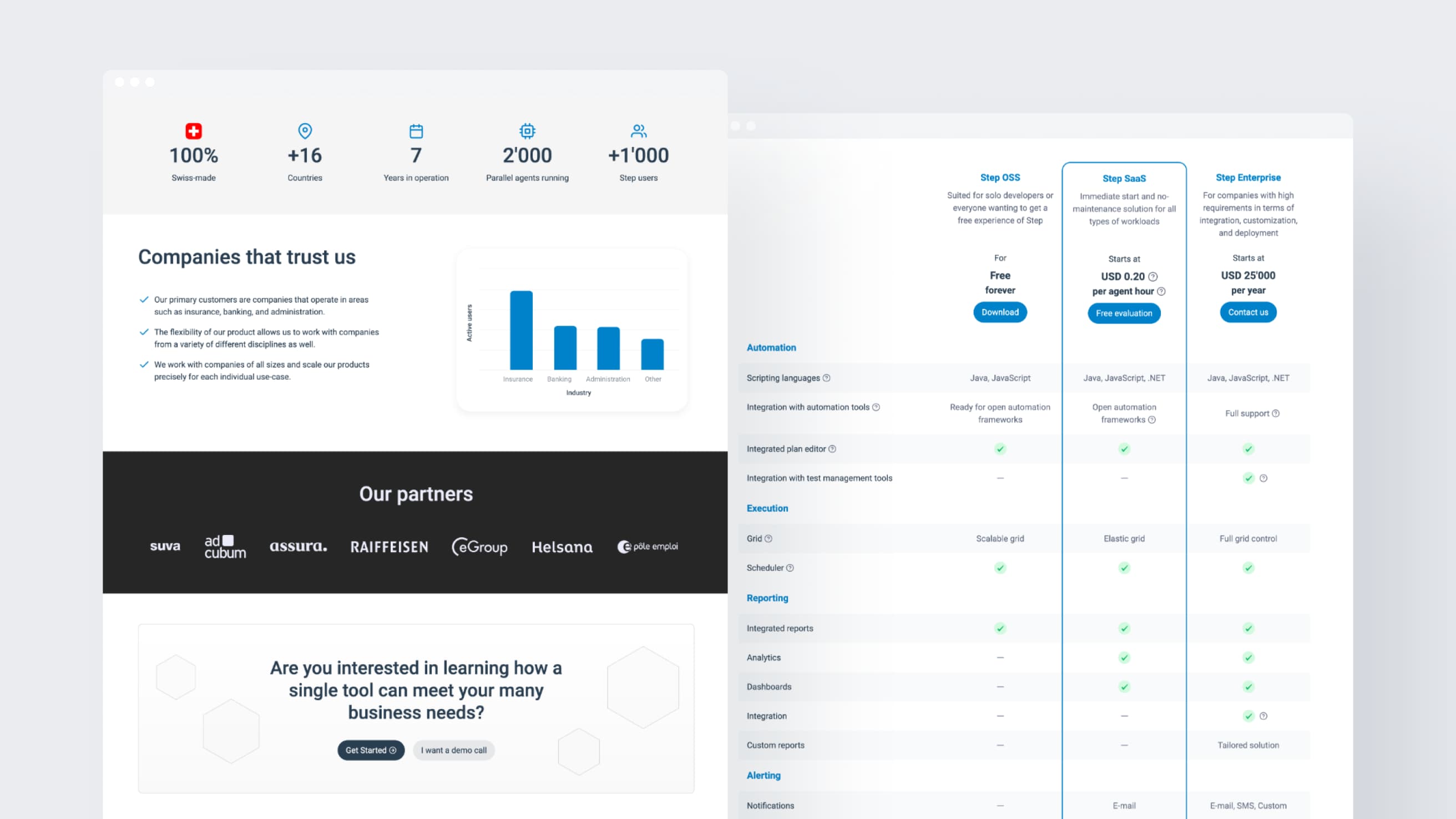
Max Performance designed and developed the Step marketing site in Webflow with a custom component library and a flexible CMS, positioning a deep engineering product for QA, testing and DevOps teams without overwhelming first-time visitors. Read the unified automation SaaS Webflow site case study.
Automation · Webflow · UI/UX
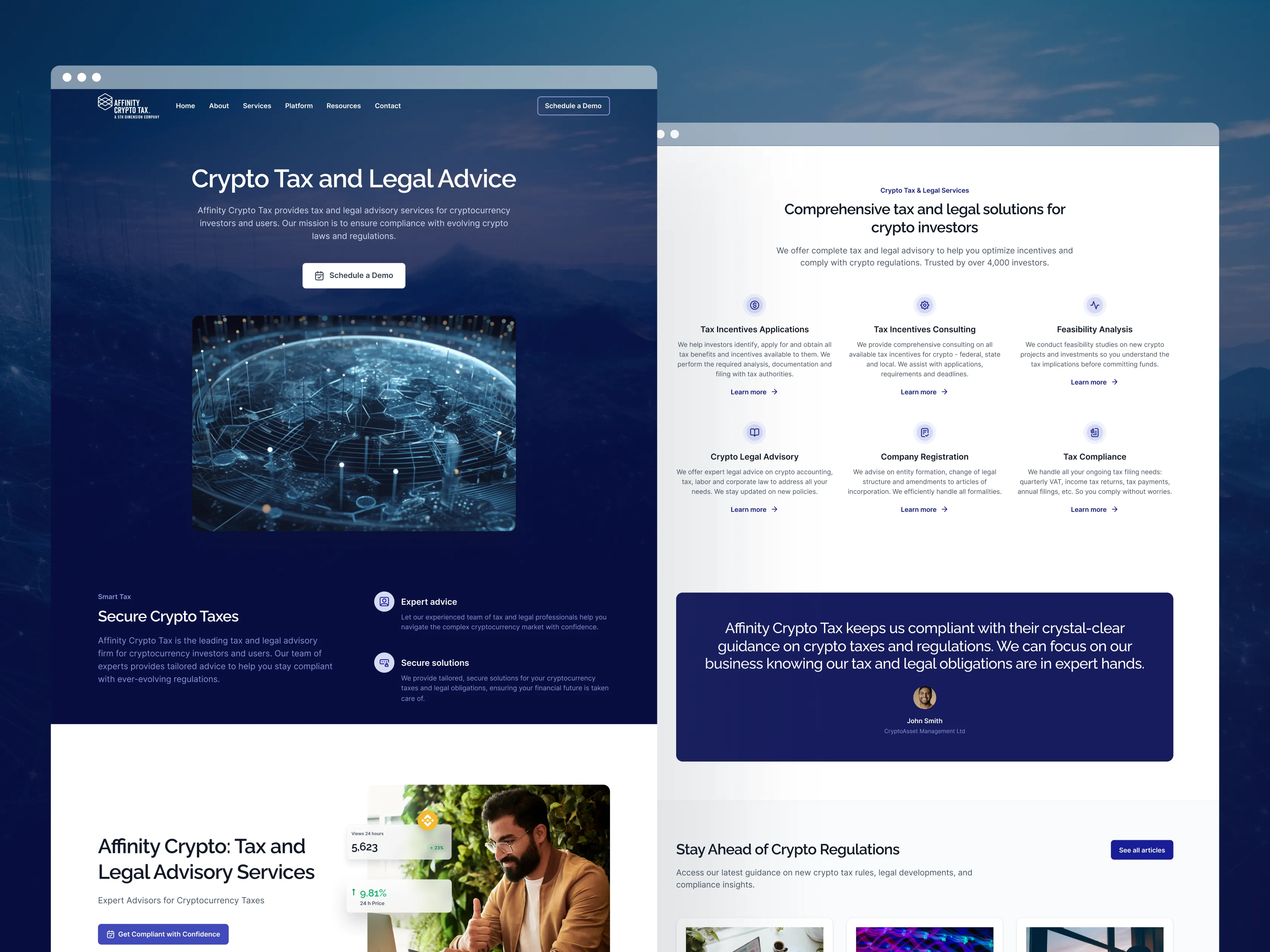
Max Performance delivered UX strategy, wireframes and a custom Webflow build for a platform serving crypto investors and institutions, including an interactive pricing calculator and a CMS structure built for future updates. Read the cold storage UX, UI and Webflow design case study.
SaaS · Crypto · Web Design
$3,500 per month
For SaaS sites that look outdated and do not bring in demos. Every client starts with a Gap Audit, then Max Performance closes the gap from wherever your site is today and keeps you ahead as your market moves.
Every client starts with a free Gap Audit.
Max Performance works with B2B SaaS and technology companies between 10 and 200 employees, selling to other businesses, where a demo or a sales call sits in the buying journey.
Industry stays open: contact center AI, HR tech, fraud and risk software, insurtech, applied AI and regulated verticals all buy the same work.
What every Max Performance client shares is the decision structure, one marketing lead or founder who owns the website and signs, with no internal web role and no purchasing committee in the way.
Max Performance works in English with teams across North America and Europe.
No B2C products, and no pure self-serve software where nobody requests a demo
No pre-revenue products without paying customers
No enterprises whose procurement process runs the project, and no companies that already employ a Head of Web or a built-out growth team
Narrow focus is the reason the first version of a SaaS page lands close to right instead of taking three rounds to find the language of the category.
The best web design agency for a SaaS company builds the page system and the search structure, not only the visual design. Ask every shortlisted agency which reference templates that agency delivers, which CMS collections that agency sets up, and what happens to the website after launch. Max Performance publishes all three answers on this page. Max Performance compares the agencies in the best web design agencies for SaaS guide.
A SaaS website rebuild at Max Performance runs on the Category Leader plan at $3,500 per month, the only Max Performance plan, after a Gap Audit that sets the order of the work. The website redesign cost guide explains what drives the number across the market.
Webflow suits most B2B SaaS marketing sites, giving the marketing team CMS control and giving developers clean rendered HTML for technical SEO. Next.js on Vercel suits SaaS companies that need custom functionality, programmatic pages or a tighter link with the product. Max Performance builds in both.
Max Performance sets the SaaS website redesign timeline in the Gap Audit, because the page count, the content and the migration decide it. On the Category Leader plan, pages go live month by month, so finished pages ship without waiting for the whole site.
Your team writes the copy, or your copywriter does, and Max Performance builds the pages with that copy. Max Performance structures the messaging hierarchy, the headings and the section order, which is the part that decides what Google and AI search engines extract from each page.
The Category Leader plan keeps the website moving after launch, covering new pages, sections, copy changes, CMS items, redirects and schema fixes, with one request active at a time and most delivered within 48 hours. The same person who set the architecture up keeps the structure intact as the site grows.
Book a call with Ed Perezand get a walkthrough of what the current website loses today and what Max Performance builds instead.